
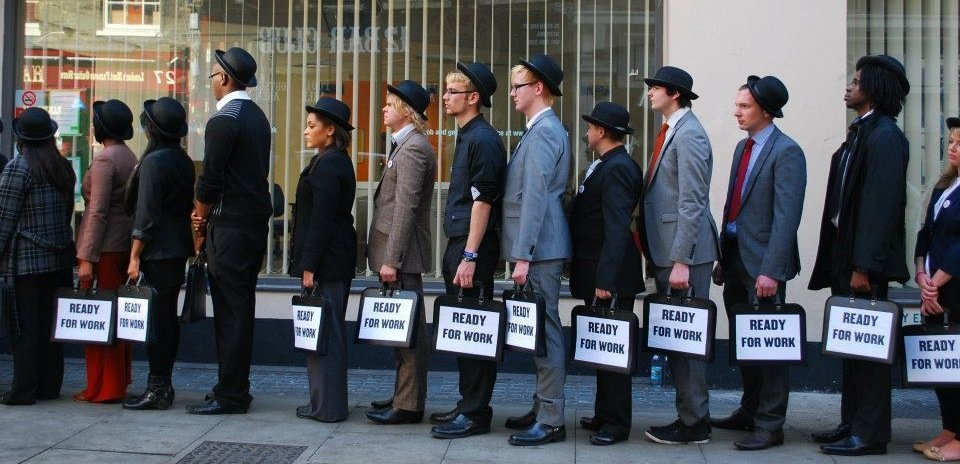
Survey Reveals That Economists Believe US Unemployment Rate Will Decline Further
WSJ Survey on Forecasters
The Wall Street Journal carried out a study on 63 financial, academic and business economists between the 6th and 10th of July. Majority of the economists expressed a common belief that the U.S. unemployment rate would descend even lower over the coming year to reach an unprecedented low rate in over 50 years.
An average number of the economic forecasters in the private sector noted that the unemployment rate which was at a low of 4% in June after plunging as low as 3.8% in May would even fall lower to 3.7% by the end of this year and further plunge to 3.6% by the middle of next year.
According to Gus Faucher, a chief economist at PNC Financial Services Group, the propelling forces in the labor market at the moment are rooting for a lower jobless rate. He added that there would be an increased demand for labor because of the rise in federal spending and the tax cut which would influence more businesses to hire more workers.
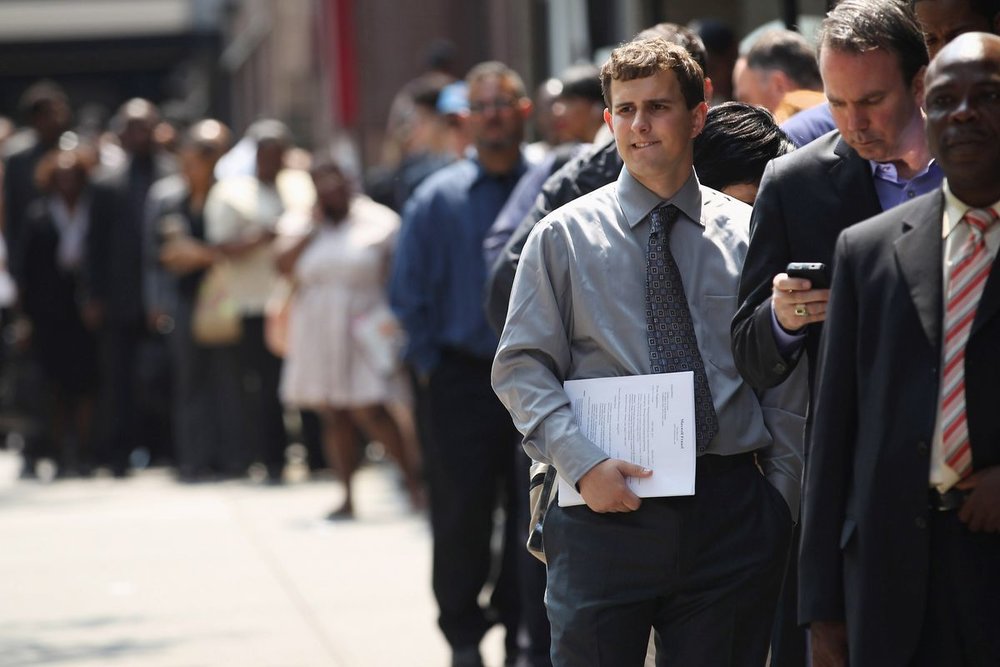
An average number of the economic forecasters in the private sector noted that the unemployment rate which was at a low of 4% in June after plunging as low as 3.8% in May would even fall lower to 3.7% by the end of this year
Historical Trend on Unemployment Rate
The unemployment rate of 3.8% recorded in May was the lowest record since April 2010 when a similar rate was recorded. Sources claimed that the rate of unemployment has only been occasionally lower than that ever since December 1969 when it was at 3.5%. Reportedly, since the labor department began its monthly records in 1948, the lowest unemployment rate was 2.5% that was recorded in May and June 1953 towards the end of the Korean War. As at 1944 during the peak of the World War II, the yearly unemployment rate was 1.2%.
Several economists have opined that the rate of unemployment cannot be below the natural rate of employment, without leading to an overheated economy and inflation among other financial distortions. For instance, Mr. Faucher noted that the economy isn’t programmed to remain functional at a stable 3.5% unemployment rate.

Several economists have opined that the rate of unemployment cannot be below the natural rate of employment, without leading to an overheated economy and inflation, among other financial distortions
However, economists’ estimates of the least sustainable employment rate are not uniform. For instance, the survey in July had economists claiming on an average that it is at 4%. In June, the policymakers at the Federal Reserve stated that on a long-term, it was within the range of 4.1%-4.7% and an average rate of 4.5%.
Thus, the natural rate of employment is generally believed to vary from time to time, and the variations are largely attributed to structural economic forces such as the growth of productivity and an overheated economy.
Effects of Unemployment Rate
Fed Chairman, Jerome Powell, in a speech last month stated that although continuously strong economic conditions could likely cause inflation and financial instability, it also could have beneficial effects such as an attractive labor market as well as additional benefits to productivity growth.
However, a majority of economists in the recent WSJ survey indicated that employers would encounter labor shortages if the jobless rate remained below the natural level in subsequent years. Only about 38% of the forecasters stated that the low unemployment rate would lead to a high level of inflation. Most of them also claimed that an increase in the demand for employees would increase workforce participation among those who were in their prime working years.
According to a chief economist at KPMG LLP, Constance Hunter, increased participation would likely occur with a hot labor market, and that would probably reduce the effects of inflation.
Although economists have stated that the low unemployment rate rarely remained uninterrupted by a recession, the economic growth that has been taking place since the middle of 2009 has remained unaffected. An average number of the forecasters surveyed gave predictions that the GDP would increase by 2.9% in the fourth quarter of this year.
However, concerns about an imminent downward turn of events are increasing. For instance, the average likelihood that the US would experience a recession was 18% in July which is the highest it has been since late 2016. About 68% of the economists also said that they could foresee a plunge in the growth rate, and several of them mentioned that the trade dispute was a potential threat to the economy. Diane Swonk of Grant Thorton LLP stated that the trade tariffs and increasing trade tensions are causing great concerns.
More in Advisor
-
`
 Will Bitcoin Crash to $0 or Hit $500K in a Decade?
Bitcoin’s future divides analysts into two extreme camps. Some see it becoming one of the most valuable financial assets in history....
October 12, 2025 -
`
 Can Anyone Really Blame Mariah Carey for ‘Leaving’ the Real World?
Mariah Carey isn’t like the rest of us. From the moment she opens her mouth and that voice pours out, she...
October 10, 2025 -
`
 Intel Invests in Nvidia, but Ratings Remain Unchanged
Intel’s stock jumped more than 30% after news broke that Nvidia poured $5 billion into the company. The rally sparked renewed...
October 5, 2025 -
`
 Homeownership vs. Real Estate Investment: What’s Better?
Homeownership has long been seen as the American dream. But today, more people are asking: Is it really the smartest way...
October 3, 2025 -
`
 Why the Armani Fashion Empire Is Set for an IPO
Giorgio Armani, one of the most iconic names in global fashion, left behind a detailed plan for the future of his...
September 27, 2025 -
`
 Why Do Pokémon Cards Outperform the S&P 500 As an Investment?
Pokémon cards have outperformed the stock market by a mile. Since 2004, they have delivered a staggering 3,821% return, according to...
September 27, 2025 -
`
 America’s Billionaires Get Older—Millennials Wait for Wealth Transfer
Many of today’s billionaires don’t match the youthful tech-founder image often portrayed. While names like Elon Musk, Sam Altman, and Mark...
September 21, 2025 -
`
 Can President Trump Legally Fire Fed Governor Lisa Cook?
Lisa Cook is right in the middle of one of the most explosive legal battles in Washington. President Trump wants her...
September 20, 2025 -
`
 Jeff Bezos’ Advice for Millennials Who Want Financial Success
Millennials today have grown up in a world where instant access to products and services is the norm. From two-day deliveries...
September 13, 2025
More From InvestmentGuru
-
 Is $1 Million the New Middle Class? Why Millionaires Don’t Feel Rich Anymore
Reaching a million dollars once symbolized success. Today, it feels more like a milestone than a finish line. Many who achieve...
Rich & FamousDecember 21, 2025 -
 Switzerland Ends Hands-Off Stance With Landmark Foreign Investment Screening Law
For years, Switzerland stood out as one of the few major economies without a broad system to screen foreign takeovers. Deals...
InvestmentsDecember 21, 2025 -
 Cash Habits of Rich Americans and Practical Tips to Grow Your Savings
Building long-term wealth isn’t about stuffing money under a mattress. Many affluent Americans understand that sitting on large piles of idle...
AdvisorDecember 14, 2025 -
 Tax Accounting is the Hottest Seasonal Job on the Market, Study
A new analysis from Monster reveals something few expected. Tax accounting is now the most in-demand seasonal job title in the...
BusinessDecember 13, 2025 -
 The Role of AI and Empathy in Modern Financial Advice
Advisers today are challenged to harness new technology without diminishing the human element that clients rely on. AI, automation, and digital...
InvestmentsDecember 7, 2025
You must be logged in to post a comment Login