

Shareholders At Spotify Can Get Their Payouts Any Time
Last Wednesday, global music site Spotify filed for an incredulous offering to the general public. The classification will not include a conventional access period during the time and key shareholders will have possession of their shares only for a limited period of time. However, this step may not be safe for Spotify’s clients and investors.
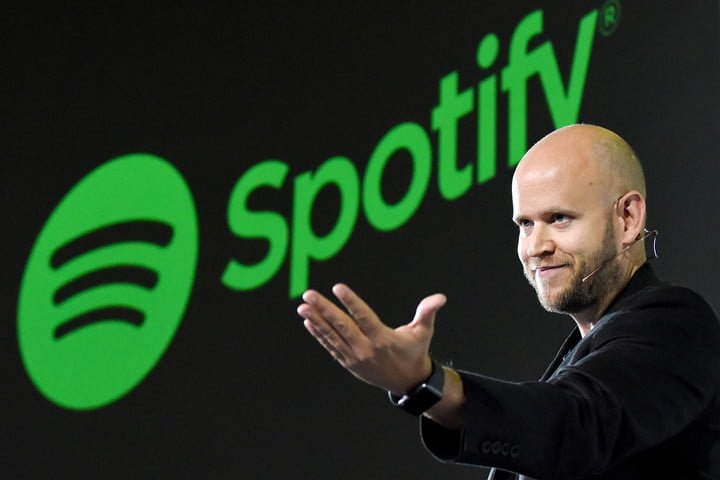
The CEO of Spotify, Daniel EK, spotted at an event
Although the company is doing everything within its power to ensure the continuation of a strong and rewarding relationship between itself and its shareholders, it’s also looking for ways to avoid hitches in its operations. As part of its plans to achieve this, Spotify is introducing a policy to make its ordinary shares more tradable.
Marketing Share
One of the numerous items of the packages being offered by the entertainment company is a special reward for all its old-time clients which allows them to get their payments anytime they wish. This special feature has set apart the much-awaited Spotify’s marketing share from the regular IPO that e-commerce community is known for.
Spotify filed for an uncommon offering on the 28 February 2018 but it didn’t include the names of underwriters. There will also be an absence of an access time which usually lasts 180 days, during the time when the recognized shareholders are normally prohibited from trading their shares in order to prevent hazardous inflow into the market.
In an official press statement released by the company, Spotify explained that as a result of this step, every member among its shareholders, such as its officers and executives who already have stakes in Spotify’s shares and many other critical investors, are free to trade a part of any or every part of their shares anytime they want. It should remain permissible under the standards of the relevant laws. This policy will be effective as soon as the listing is made available.
 Spotify has recently offered an IPO worth $1 billion.
On the other hand, one particular China-based e-commerce company, Tencent, which has 7.6% ordinary shares at Spotify will be excluded from the policy. As stated in the filing, allies working with Tencent, which includes Tencent Music Entertainment Group(TMEG), have accepted the management’s decision not to trade ordinary shares for as long as a three-year gap, starting from 15th December 2017.
Spotify’s CEO, Daniel Ek, and his partner, who is also the co-founder, Martin Lorentzon, are not bound by the stipulated agreement. Ek possesses 25.8% of Spotify while Lorentzon possesses 14.1% of the company. Other investors who are not bound by this policy are Technology Crossover Ventures, with 5.5%; Sony, 5.8%; and Tiger Global, 6.8%.
When the access period comes to a close, this new development has the power to cause intensive skyrocketed flexibility for some stock. A closely related case study is Snap. As of last year, the founder and CEO of Snap, Evan Spiegel, already resolved not to trade the company’s shares for the one whole year because of the IPO. Unfortunately for him and the company, the value of stock came down around the end of July and the beginning of August, when the access period came to an end.
Risks Involved
Another problem is the internal trades which also have the potential of putting anxiety in the market, and this can make the company’s key affiliates and shareholders lose faith in the potential of the shares.
 Spotify’s recent launch is laced with concerns.
Spotify listed four dangers in the column which contained the types of risks involved in having ordinary shares. One of them is the lack of a lock-up grace period. Another possible factor that was considered as risk-factors is the absence of underwriters which is a stipulated standard price. A consequence of such risks would be that a flat amount of shares for trading would be missing, and a public awareness campaign like a public walk would not be held to advertise the offering.
The spokesperson for the company explained that such type of dissimilarities from an original public offering which has been underwritten might lead to an elusive price value of the market for its ordinary shares. It will also affect the quantity of sale as well as will negatively affect the investors’ capacity to trade their ordinary shares.
More in Business
-
`
 Why the Rich and Famous Are Selling Their Ski Mansions in Secret
A quiet layer of Colorado’s ski-home market rarely shows up on public real estate platforms. Behind the scenes, multi-million-dollar mansions change...
April 25, 2026 -
`
 What’s the Average Investment Portfolio for People in Their 30s Today?
Reaching the 30s often brings a mix of financial priorities that compete for attention. Home ownership, student loan repayment, growing families,...
April 19, 2026 -
`
 Is Tesla’s Investment in xAI a Smart Move for Investors?
Tesla’s decision to invest nearly $2 billion in xAI has quickly sparked debate across Wall Street. At first, the move may...
April 12, 2026 -
`
 If You Owe Student Loans, Don’t Miss This Treasury Update
A major shift is on the horizon for millions of student loan borrowers across the United States. The federal government has...
April 5, 2026 -
`
 Is $1 Million the New Middle Class? Why Millionaires Don’t Feel Rich Anymore
Reaching a million dollars once symbolized success. Today, it feels more like a milestone than a finish line. Many who achieve...
December 21, 2025 -
`
 Switzerland Ends Hands-Off Stance With Landmark Foreign Investment Screening Law
For years, Switzerland stood out as one of the few major economies without a broad system to screen foreign takeovers. Deals...
December 21, 2025 -
`
 Cash Habits of Rich Americans and Practical Tips to Grow Your Savings
Building long-term wealth isn’t about stuffing money under a mattress. Many affluent Americans understand that sitting on large piles of idle...
December 14, 2025 -
`
 Tax Accounting is the Hottest Seasonal Job on the Market, Study
A new analysis from Monster reveals something few expected. Tax accounting is now the most in-demand seasonal job title in the...
December 13, 2025 -
`
 The Role of AI and Empathy in Modern Financial Advice
Advisers today are challenged to harness new technology without diminishing the human element that clients rely on. AI, automation, and digital...
December 7, 2025
More From InvestmentGuru
-
 Warren Buffett’s 2 Success Lessons Ndamukong Suh Still Follows
Ndamukong Suh learned about success from one of the most respected investors in the world. More than 15 years ago, while...
Rich & FamousSeptember 12, 2026 -
 Why Investing in a Single Stock Can Be a Risky Move
A stock can look like a clear winner when a company has strong products, rising profits, or an exciting future. That...
AdvisorSeptember 4, 2026 -
 Retail Investors Sell SpaceX Shares for the First Time Since IPO
SpaceX retail investors shifted direction on August 7, selling more shares than they bought for the first time since the company...
InvestmentsAugust 30, 2026 -
 Robinhood Launches $200M Fund for Y Combinator Startups
Robinhood is preparing to give retail investors access to a fund focused on startups linked to Y Combinator, one of Silicon...
BusinessAugust 22, 2026 -
 Why Korean Celebrities and Sports Stars Just Invested $70 Million in Athletics
The Athletics continue to build financial support for their move to Las Vegas, adding another group of well-known investors just days...
Rich & FamousAugust 15, 2026
You must be logged in to post a comment Login