
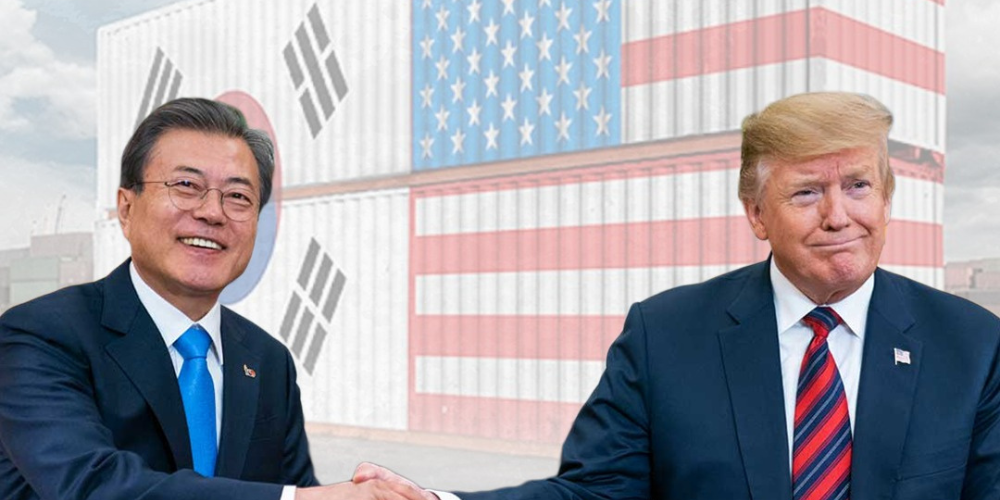
U.S. and South Korea Release Details of Trade Agreement
The United States and South Korea have announced a landmark trade agreement that reshapes their economic alliance and strengthens industrial collaboration. The new deal outlines a massive $150 billion investment by South Korea in U.S. shipbuilding, as well as an additional $200 billion dedicated to strategic industries. Together, these initiatives aim to create jobs, boost innovation, and secure long-term stability across both nations.
Strengthening the Economic Alliance
This announcement came after an October summit between South Korean President Lee Jae Myung and U.S. President Donald Trump. During the meeting, both leaders agreed to cut import tariffs on South Korean goods from 25% to 15%, a move expected to fuel cross-border trade and competitiveness.
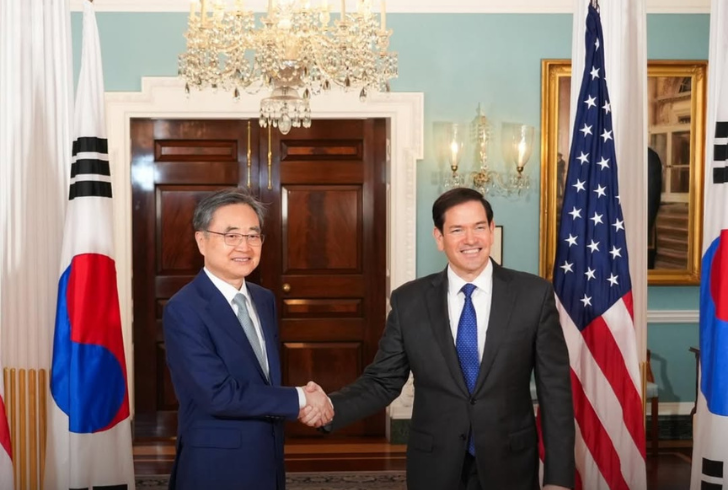
Instagram | @thekoreatimes_official | U.S. and South Korea unite to boost trade and drive innovation through a powerful new partnership.
South Korea’s Industry Minister Kim Jung-kwan and U.S. Commerce Secretary Howard Lutnick signed a memorandum of understanding (MoU) that defines a 27-point framework. This plan focuses on technology, clean energy, defense, and manufacturing growth. It reinforces a partnership built on transparency and mutual benefit rather than dependence.
Funding Commitments and Timelines
According to the MoU, investment projects will be selected by President Trump in consultation with South Korean officials. Once the projects are confirmed, South Korea will transfer the required funds within 45 days. This structured approach highlights accountability and efficiency.
The agreement specifies that the $200 billion investment will be distributed over several years, capped at $20 billion per year. This measure aims to maintain currency stability and prevent market disruption. If volatility occurs, South Korea may request an adjustment to timing or funding levels, and the U.S. will review the request in good faith.
Sectors Driving the Partnership
The trade deal covers vital industries that shape the global economy. South Korea and the U.S. will collaborate in the fields of artificial intelligence, semiconductors, nuclear technology, pharmaceuticals, and shipbuilding.
The White House confirmed that South Korea received approval to build nuclear-powered submarines, marking a significant leap in defense cooperation. Both countries will also coordinate efforts to ensure reliable fuel supplies and advance clean energy technology.
In addition, South Korea plans to spend $25 billion on U.S. military equipment by 2030 and contribute $33 billion in support of “U.S. Forces Korea.” These measures demonstrate a shared commitment to security and regional balance.
Trade and Market Access Enhancements
As part of the deal, the U.S. reduced tariffs on South Korean automobiles from 25% to 15%, giving Korean automakers a stronger foothold in the American market. South Korea, in return, removed its 50,000-unit cap on U.S. car imports that meet Federal Motor Vehicle Safety Standards. It will also accept existing U.S. emissions certifications, cutting unnecessary bureaucracy and saving time for manufacturers.
Agriculture also plays a vital role in this partnership. Both nations agreed to simplify regulatory approvals for biotechnology products and reduce non-tariff barriers that affect food trade. South Korea will set up a dedicated “U.S. Desk” to manage horticultural product requests and ensure smooth market access for American meats and dairy products.
Advancing Digital and Technological Cooperation
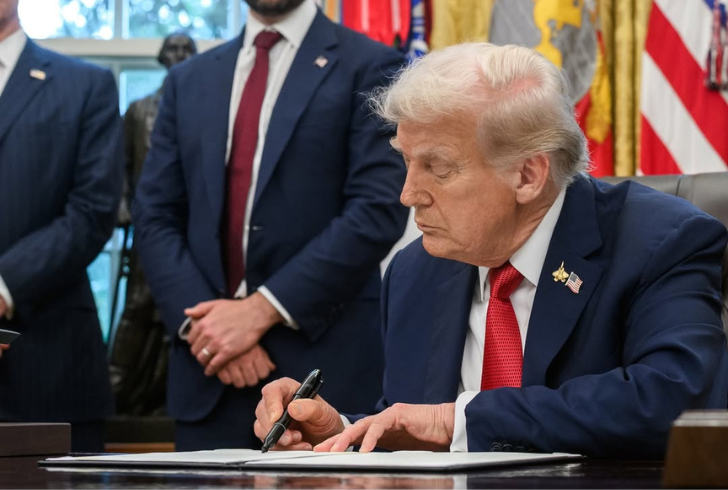
Instagram | @whitehouse | The U.S. expands its trade reach with new partnerships that open doors to Latin American markets.
The pact also includes strong protections for fair digital trade. Both governments agreed to guard against discriminatory practices that could sideline U.S. tech companies operating in South Korea. The deal keeps cross-border data flows open and prevents network usage fees from being used as barriers to competition. Together, these measures support a healthier digital marketplace—one that encourages innovation and keeps the rules transparent.
Broader Global Moves
President Trump also announced new trade deals with Argentina, El Salvador, Guatemala, and Ecuador. The agreements include provisions on economic and security cooperation intended to strengthen supply chains across the region. According to the White House, these deals are designed to help U.S. farmers, ranchers, small manufacturers, and small businesses reach more customers throughout Latin America.
Taken as a whole, the U.S.–South Korea deal is far more than a financial arrangement. It reflects deepening trust, shared strategic priorities, and a forward-looking approach to global competition. The framework supports technological progress, reinforces defense cooperation, and bolsters economic resilience for both countries.
With balanced trade as its backbone, the partnership positions the U.S. and South Korea for steady, long-term growth. It illustrates how collaborative planning can turn geopolitical challenges into opportunities—ultimately creating a more secure and economically dynamic future for both nations.
More in Investments
-
`
 Can Anyone Really Blame Mariah Carey for ‘Leaving’ the Real World?
Mariah Carey isn’t like the rest of us. From the moment she opens her mouth and that voice pours out, she...
October 10, 2025 -
`
 Intel Invests in Nvidia, but Ratings Remain Unchanged
Intel’s stock jumped more than 30% after news broke that Nvidia poured $5 billion into the company. The rally sparked renewed...
October 5, 2025 -
`
 Homeownership vs. Real Estate Investment: What’s Better?
Homeownership has long been seen as the American dream. But today, more people are asking: Is it really the smartest way...
October 3, 2025 -
`
 Why the Armani Fashion Empire Is Set for an IPO
Giorgio Armani, one of the most iconic names in global fashion, left behind a detailed plan for the future of his...
September 27, 2025 -
`
 Why Do Pokémon Cards Outperform the S&P 500 As an Investment?
Pokémon cards have outperformed the stock market by a mile. Since 2004, they have delivered a staggering 3,821% return, according to...
September 27, 2025 -
`
 America’s Billionaires Get Older—Millennials Wait for Wealth Transfer
Many of today’s billionaires don’t match the youthful tech-founder image often portrayed. While names like Elon Musk, Sam Altman, and Mark...
September 21, 2025 -
`
 Can President Trump Legally Fire Fed Governor Lisa Cook?
Lisa Cook is right in the middle of one of the most explosive legal battles in Washington. President Trump wants her...
September 20, 2025 -
`
 Jeff Bezos’ Advice for Millennials Who Want Financial Success
Millennials today have grown up in a world where instant access to products and services is the norm. From two-day deliveries...
September 13, 2025 -
`
 Maison Margiela’s First-Ever Celebrity Campaign Stars Miley Cyrus
Miley Cyrus just changed the rules again. In August 2025, she became the first celebrity ambassador in Maison Margiela’s 37-year history....
September 12, 2025
More From InvestmentGuru
-
 Is $1 Million the New Middle Class? Why Millionaires Don’t Feel Rich Anymore
Reaching a million dollars once symbolized success. Today, it feels more like a milestone than a finish line. Many who achieve...
Rich & FamousDecember 21, 2025 -
 Switzerland Ends Hands-Off Stance With Landmark Foreign Investment Screening Law
For years, Switzerland stood out as one of the few major economies without a broad system to screen foreign takeovers. Deals...
InvestmentsDecember 21, 2025 -
 Cash Habits of Rich Americans and Practical Tips to Grow Your Savings
Building long-term wealth isn’t about stuffing money under a mattress. Many affluent Americans understand that sitting on large piles of idle...
AdvisorDecember 14, 2025 -
 Tax Accounting is the Hottest Seasonal Job on the Market, Study
A new analysis from Monster reveals something few expected. Tax accounting is now the most in-demand seasonal job title in the...
BusinessDecember 13, 2025 -
 The Role of AI and Empathy in Modern Financial Advice
Advisers today are challenged to harness new technology without diminishing the human element that clients rely on. AI, automation, and digital...
InvestmentsDecember 7, 2025
You must be logged in to post a comment Login