
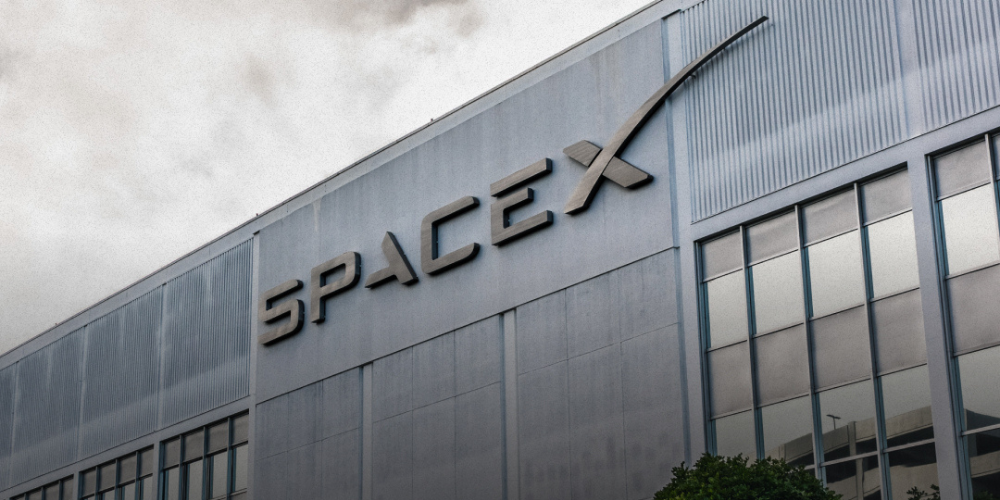
Why Space ETFs Are Falling Despite SpaceX’s Historic IPO
The highly anticipated public debut of SpaceX was expected to bring fresh excitement to the commercial space industry. Instead, the event has coincided with one of the toughest months for space-focused exchange-traded funds (ETFs) in years.
While SpaceX attracted record-breaking investor demand, many publicly traded space companies struggled with steep share-price declines, dragging the sector lower.
Market analysts now describe the situation as an “investment coma,” where enthusiasm surrounding one company has overshadowed much of the broader industry.
Space ETFs Record Weakest Performance
The Procure Space ETF (NYSEARCA: UFO), the first ETF dedicated entirely to the space industry, has tracked the sector since 2019. The fund is now heading toward its weakest monthly performance since March 2020. As of Wednesday, the ETF had fallen nearly 28% during the month, close to the 28.8% decline recorded at the beginning of the COVID-19 pandemic.

Instagram | @theledger.asia | Space ETFs continued to decline even after SpaceX’s public debut, as investor enthusiasm across the sector weakened.
The fund also posted its eighth consecutive daily decline, marking its longest losing streak since August 22, 2023, according to Dow Jones Market Data.
Before SpaceX’s initial public offering, ProcureAM Chief Executive Officer Andrew Chanin believed the listing would reshape public perception of the space business.
“A company like this coming to the public markets and being essentially a pure-play space company, showing people that, you know, real space companies exist. Maybe we should look at this industry a little bit differently and stop thinking of it as a far-off, futuristic science-fiction hobby for billionaires.”
Many industry observers expected the IPO to attract new investors into the space sector. At the same time, others warned that SpaceX could pull investment away from competing companies, a concern that now appears to be affecting the market.
SpaceX Impact Falls Short on Sector Boost
SpaceX completed one of the largest IPOs in recent history, raising $85.7 billion. The company also announced a $25 billion bond offering, which received exceptionally strong investor demand. Despite those milestones, SpaceX shares have experienced noticeable price swings since listing on the Nasdaq on June 12.
The stock briefly declined to $147.11 per share, slipping below its $150 IPO price, after investors reacted to the company’s latest bond issuance. The transaction is expected to close by Friday.
Meanwhile, SpaceX continues to gain a larger presence across major market indexes. The company has already joined the CRSP Market Indexes, which benchmark nearly $3 trillion in public equities and support numerous mutual funds and ETFs. It is also scheduled for inclusion in the Russell indexes, requiring index-tracking funds to purchase SpaceX shares.
Analysts Describe an “Investment Coma”

Instagram | @tungtatest | The historic SpaceX IPO brought validation to the space industry, but failed to stabilize its volatile market.
Micah Walter-Range, president of space consulting firm Caelus Partners and a contributor to the index behind the UFO ETF, believes investor behavior has shifted dramatically after the IPO.
“All space ETFs are feeling the ‘investment coma’ from the pre-launch fear of missing out on SpaceX to the reality now of owning a very volatile space stock.”
Walter-Range also noted that several competing space ETFs have performed even worse because they hold fewer companies and carry greater exposure to highly volatile stocks.
The Global X Space Tech ETF has dropped 32% during June. The Tuttle Capital Space Industry Income Blast ETF has declined 40%, while the VanEck Space ETF has fallen 35%, according to FactSet.
Major Holdings Continue to Slide
Nearly every leading holding inside the UFO ETF has posted losses throughout June.
Only two companies avoided the broader sell-off: Garmin, the fund’s largest holding specializing in GPS and wearable technology, and SpaceX, which Procure added to its portfolio on June 16 after its public listing. Many other ETFs also added SpaceX shortly after the IPO.
Several prominent space companies experienced even steeper declines. Rocket Lab, one of SpaceX’s launch competitors, has lost about 40% of its value during June. Planet Labs has fallen approximately 50%, while AST SpaceMobile, another SpaceX rival, is down roughly 40% over the same period.
SpaceX’s historic stock market debut has increased visibility for the commercial space industry, but it has also highlighted the sector’s volatility. Record fundraising and strong institutional demand have not translated into gains for most space-related companies.
Instead, investors have concentrated their attention on a single market leader while many established space businesses continue to face heavy selling pressure.
The coming months will likely determine whether confidence broadens across the industry or remains focused almost entirely on SpaceX.
More in Advisor
-
`
 Why the Ultra-Wealthy Are Investing Outside the US
The United States still holds its position as the world’s largest center for billionaire and millionaire wealth. Yet a noticeable shift...
May 17, 2026 -
`
 SpaceX Is Going Public — Here’s What $5,000 Could Become in 5 Years
Anticipation is building around one of the most closely watched public offerings in recent memory. SpaceX, led by Elon Musk, has...
May 10, 2026 -
`
 Reed Hastings, Netflix Co-Founder, Is Leaving the Company
Netflix confirmed in its first-quarter earnings report that Hastings will not seek reelection to the board and will officially part ways...
May 1, 2026 -
`
 Why the Rich and Famous Are Selling Their Ski Mansions in Secret
A quiet layer of Colorado’s ski-home market rarely shows up on public real estate platforms. Behind the scenes, multi-million-dollar mansions change...
April 25, 2026 -
`
 What’s the Average Investment Portfolio for People in Their 30s Today?
Reaching the 30s often brings a mix of financial priorities that compete for attention. Home ownership, student loan repayment, growing families,...
April 19, 2026 -
`
 Is Tesla’s Investment in xAI a Smart Move for Investors?
Tesla’s decision to invest nearly $2 billion in xAI has quickly sparked debate across Wall Street. At first, the move may...
April 12, 2026 -
`
 If You Owe Student Loans, Don’t Miss This Treasury Update
A major shift is on the horizon for millions of student loan borrowers across the United States. The federal government has...
April 5, 2026 -
`
 Is $1 Million the New Middle Class? Why Millionaires Don’t Feel Rich Anymore
Reaching a million dollars once symbolized success. Today, it feels more like a milestone than a finish line. Many who achieve...
December 21, 2025 -
`
 Switzerland Ends Hands-Off Stance With Landmark Foreign Investment Screening Law
For years, Switzerland stood out as one of the few major economies without a broad system to screen foreign takeovers. Deals...
December 21, 2025
More From InvestmentGuru
-
 Nick Clegg’s Nscale Stake Could Be Worth $40 Million After IPO
Nick Clegg could see the value of his stake in UK-based data center company Nscale rise sharply if the company completes...
Rich & FamousOctober 10, 2026 -
 Where Does the Money Go When the Stock Market Crashes?
A sharp stock market drop can erase trillions of dollars in market value within hours. That can make it seem as...
AdvisorOctober 3, 2026 -
 How to Protect Your Portfolio During Market Volatility
Market swings can test even the most carefully planned investment strategy. A sudden drop can trigger fear, while a sharp rise...
InvestmentsSeptember 26, 2026 -
 Why Nvidia Is Spending Nearly $13 Billion on Hugging Face
Nvidia is making a major move in the artificial intelligence software market. The chipmaker plans to acquire AI platform Hugging Face...
BusinessSeptember 19, 2026 -
 Warren Buffett’s 2 Success Lessons Ndamukong Suh Still Follows
Ndamukong Suh learned about success from one of the most respected investors in the world. More than 15 years ago, while...
Rich & FamousSeptember 12, 2026
You must be logged in to post a comment Login