

Why the Ultra-Wealthy Are Investing Outside the US
The United States still holds its position as the world’s largest center for billionaire and millionaire wealth. Yet a noticeable shift is underway among high-net-worth investors. More millionaires and billionaires are spreading their money, residences, and long-term plans across multiple countries instead of relying entirely on the U.S.
A recent report from Arton Capital reveals that wealthy individuals are increasingly treating global residency and investment strategies like diversified portfolios. While the U.S. remains a major financial anchor, cities such as Singapore and Dubai are gaining momentum as preferred destinations for wealth preservation and international mobility.
According to the report, nearly 40 percent of the world’s ultrarich population lives in the United States. That figure represents around 221,800 individuals. Out of that number, approximately 205,000 are primary residents in the country.
The report defines ultra-high-net-worth individuals as people with investable assets of at least $30 million, excluding their primary homes. Foreign-born millionaires and billionaires account for about 13 percent of this group in the U.S.
Despite the country’s strong financial system and global influence, many wealthy investors no longer want all of their assets tied to one country. Instead, they are creating backup plans through overseas investments, secondary residences, and alternative citizenship options.
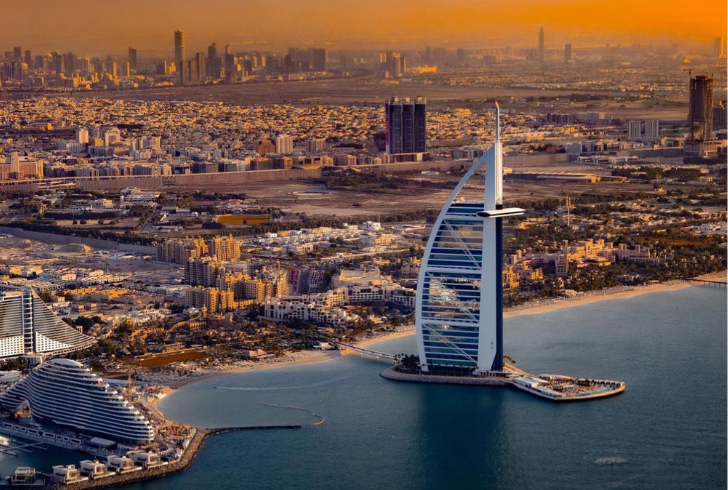
Instagram | dubai | Wealthy elites are diversifying residency beyond the U.S. to hubs like Dubai and Singapore for better mobility.
A Rapid Rise in Global Wealth
Researchers at Arton Capital expect the global wealthy population to grow sharply over the next several years. By 2030, the number of people holding more than $5 million in wealth could reach 7.7 million worldwide.
The ultrarich category is also expected to climb significantly. The report projects a 34 percent increase, bringing the number of individuals with more than $30 million in assets to roughly 734,100 by 2030.
At the same time, their collective wealth is expected to jump from $63 trillion to $84 trillion.
This growth is changing how wealthy individuals approach risk. In the past, many centered their finances around one primary country. That strategy is fading as global uncertainty continues to affect taxes, politics, regulations, and investment markets.
Why Investors Are Looking Overseas
Armand Arton, CEO of Arton Capital, described the United States as “one of the most resilient and attractive wealth hubs globally because of the depth and breadth of its financial ecosystem.”
He explained that the U.S. still offers unmatched access to capital markets, infrastructure, and innovation, especially in the technology sector. The country also provides a scale that few nations can match.
Arton told “Newsweek” that wealthy investors continue to see the U.S. as a place where wealth can grow substantially, not just remain protected.
Still, attitudes among the ultrarich are shifting.
“The mindset has shifted from concentration to diversification,” Arton said.
Economic instability, geopolitical tensions, changing tax structures, and increasing regulations are pushing wealthy individuals to think more internationally. Instead of relying on a single nation, many are asking whether they have enough flexibility if conditions suddenly change.
That concern has encouraged what Arton Capital describes as a “portfolio approach.” Investors are diversifying not only stocks, businesses, and real estate, but also passports, tax residency, and citizenship options.
Singapore and Dubai Gain Attention
As traditional financial centers face pressure, several international cities are becoming more attractive to wealthy investors.
London, long viewed as a major global wealth center, is gradually losing some of its appeal among international elites. Analysts point to tax changes and economic uncertainty as contributing factors.
Meanwhile, Singapore and Dubai are drawing increasing interest because of business-friendly policies, lower taxes, and strong international connectivity.
Researchers also found that wealthy individuals are becoming more global in how they structure investments. Instead of focusing on one country, many now distribute capital across several regions, including Europe, the Middle East, and Asia.
This strategy allows investors to reduce exposure to political or economic shocks tied to any single nation.
Growing Appeal of Second Residencies

Instagram | etnow | Golden visas grant wealthy investors foreign residency or citizenship in exchange for capital.
Programs commonly known as “golden visas” or citizenship-by-investment programs are also attracting wealthy applicants. These programs allow individuals to gain residency rights or second citizenship through financial investment in another country.
For wealthy families, second residencies offer more freedom and security. They make international travel easier, open new tax planning options, provide access to quality education and healthcare abroad, and help reduce risks linked to political or economic instability.
Arton noted that wealthy individuals increasingly value mobility and optionality in a world where global conditions can shift rapidly.
“The demand for flexibility, mobility and risk diversification will only increase,” he said.
What This Means for the United States
The United States is unlikely to lose its status as a leading financial center anytime soon. Many wealthy individuals still maintain deep business interests, family ties, and major investments in the country.
Yet the report suggests the U.S. is becoming part of a broader international strategy rather than the sole focus of global wealth planning.
As more millionaires and billionaires establish secondary bases abroad, the country could face increased competition from emerging wealth hubs. That competition may affect investment flows, tax revenue, and long-term financial influence in global markets.
The world’s wealthiest individuals are changing how they manage risk, opportunity, and global access. While the United States remains a powerful financial center, many investors no longer view one country as enough.
Instead, the ultrarich are spreading investments, residences, and citizenship options across multiple regions to protect wealth and maintain flexibility. With global uncertainty showing no signs of slowing down, international diversification is quickly becoming a standard strategy among the world’s richest individuals.
More in Advisor
-
`
 Why There Were No “Good Looks” at This Year’s Bezos Bash Met Gala
The Met Gala has always lived at the intersection of fashion, fame, and financial excess. This year, that intersection turned sharper....
May 24, 2026 -
`
 SpaceX Is Going Public — Here’s What $5,000 Could Become in 5 Years
Anticipation is building around one of the most closely watched public offerings in recent memory. SpaceX, led by Elon Musk, has...
May 10, 2026 -
`
 Reed Hastings, Netflix Co-Founder, Is Leaving the Company
Netflix confirmed in its first-quarter earnings report that Hastings will not seek reelection to the board and will officially part ways...
May 1, 2026 -
`
 Why the Rich and Famous Are Selling Their Ski Mansions in Secret
A quiet layer of Colorado’s ski-home market rarely shows up on public real estate platforms. Behind the scenes, multi-million-dollar mansions change...
April 25, 2026 -
`
 What’s the Average Investment Portfolio for People in Their 30s Today?
Reaching the 30s often brings a mix of financial priorities that compete for attention. Home ownership, student loan repayment, growing families,...
April 19, 2026 -
`
 Is Tesla’s Investment in xAI a Smart Move for Investors?
Tesla’s decision to invest nearly $2 billion in xAI has quickly sparked debate across Wall Street. At first, the move may...
April 12, 2026 -
`
 If You Owe Student Loans, Don’t Miss This Treasury Update
A major shift is on the horizon for millions of student loan borrowers across the United States. The federal government has...
April 5, 2026 -
`
 Is $1 Million the New Middle Class? Why Millionaires Don’t Feel Rich Anymore
Reaching a million dollars once symbolized success. Today, it feels more like a milestone than a finish line. Many who achieve...
December 21, 2025 -
`
 Switzerland Ends Hands-Off Stance With Landmark Foreign Investment Screening Law
For years, Switzerland stood out as one of the few major economies without a broad system to screen foreign takeovers. Deals...
December 21, 2025
More From InvestmentGuru
-
 Nick Clegg’s Nscale Stake Could Be Worth $40 Million After IPO
Nick Clegg could see the value of his stake in UK-based data center company Nscale rise sharply if the company completes...
Rich & FamousOctober 10, 2026 -
 Where Does the Money Go When the Stock Market Crashes?
A sharp stock market drop can erase trillions of dollars in market value within hours. That can make it seem as...
AdvisorOctober 3, 2026 -
 How to Protect Your Portfolio During Market Volatility
Market swings can test even the most carefully planned investment strategy. A sudden drop can trigger fear, while a sharp rise...
InvestmentsSeptember 26, 2026 -
 Why Nvidia Is Spending Nearly $13 Billion on Hugging Face
Nvidia is making a major move in the artificial intelligence software market. The chipmaker plans to acquire AI platform Hugging Face...
BusinessSeptember 19, 2026 -
 Warren Buffett’s 2 Success Lessons Ndamukong Suh Still Follows
Ndamukong Suh learned about success from one of the most respected investors in the world. More than 15 years ago, while...
Rich & FamousSeptember 12, 2026
You must be logged in to post a comment Login