
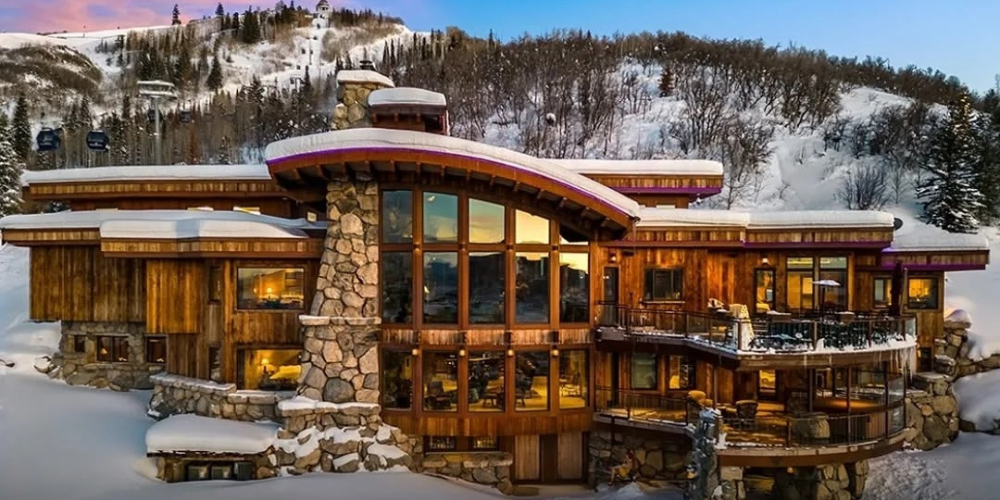
Why the Rich and Famous Are Selling Their Ski Mansions in Secret
A quiet layer of Colorado’s ski-home market rarely shows up on public real estate platforms. Behind the scenes, multi-million-dollar mansions change hands in private conversations, sealed networks, and discreet negotiations.
In resort towns like Vail and Beaver Creek, luxury properties priced between $20 million and $70 million often never appear on the MLS, raising a practical question for buyers: does this hidden marketplace offer rare opportunity, or does it carry hidden risk?
Reports from brokers across the region show a split picture. Some estimate nearly 40% of high-end listings stay off-market, while others place the number closer to 5%. The gap highlights how inconsistent and relationship-driven this segment can be, where access matters as much as capital.
Why Luxury Ski Homes Stay Off-Market
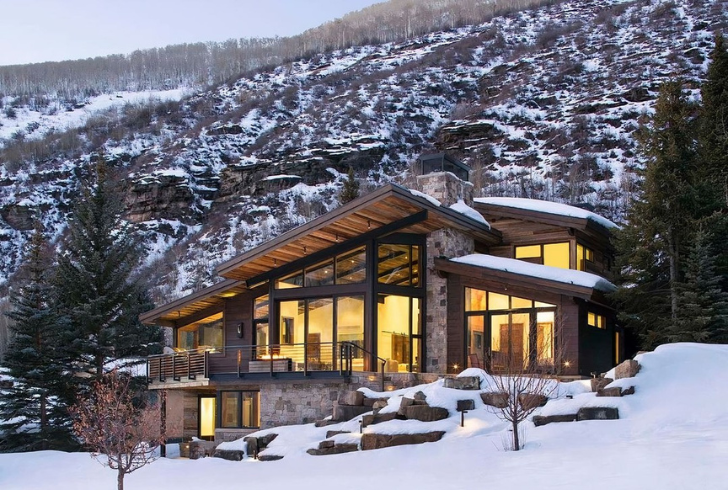
Instagram | @davidarmayor | Off-market transactions in elite locales like Vail allow wealthy owners to maintain privacy.
Privacy stands at the center of most off-market decisions. In ski destinations like Vail, wealth often becomes highly visible due to second or third homes that far exceed primary residences in value.
Meg Garrido, broker with the Stockton Group at Compass in Vail, describes a consistent pattern among affluent buyers and sellers. “Vail is often where people come to be quiet about their money,” she said. “We often see people tripling or quadrupling the value of their primary home here. Because of that, they like to keep things very much under the radar.”
For many owners, keeping a transaction out of public listings helps avoid attention tied to large financial moves. Even when legal structures such as LLCs or trusts are used to protect identity, MLS exposure can still draw interest that some prefer to avoid.
Another factor comes from timing. Luxury ski homes often take longer to sell due to limited buyer pools and seasonal demand. Public listings that sit too long can create unwanted assumptions.
Tye Stockton, founding agent of the Stockton Group, explains the perception issue clearly: “Sellers like the idea of their properties not accumulating days on market, because that shifts perception quickly. People start to think something’s wrong with the house. In reality, it’s not. We have seasonality, and days on market just don’t fit the narrative here the way they would in Dallas or Miami.”
Pricing Without Public Pressure
In ultra-luxury ski markets, pricing does not always follow traditional comparable-based models. Limited inventory and unique land characteristics shift the conversation toward scarcity and rebuilding cost rather than square footage.
Stockton notes how valuation changes at the highest tier. “We’re not selling this on a square footage basis. We are selling scarcity and replacement cost,” he said. “The underlying land value may be $30 million just to acquire a piece of land in Vail, and then construction costs can exceed $2,000 a foot.”
This approach often creates pricing that feels disconnected from broader housing trends, especially in resort communities where land availability is tight and development costs remain high.
Still, off-market pricing can vary widely depending on seller expectations and urgency, creating a spread that buyers must carefully evaluate.
When Off-Market Listings Miss the Mark
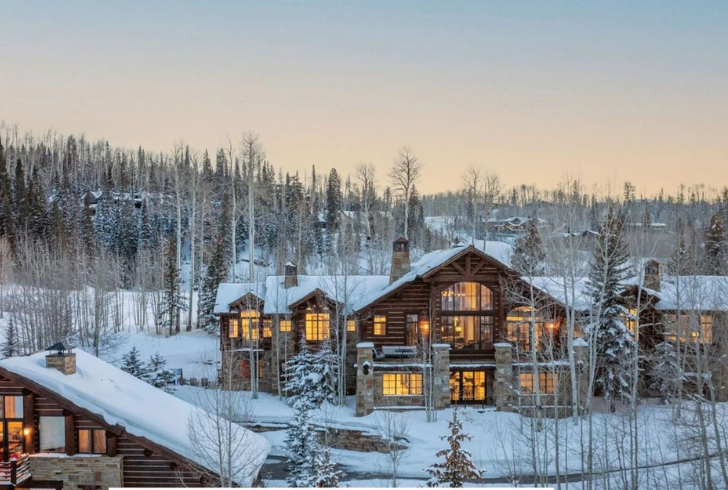
Instagram | countryandtownhouse | Private listings often carry a premium that doesn’t reflect true market value due to restricted visibility.
Not all private listings align with buyer expectations. Some brokers point out that asking prices in off-market deals can drift far above market reality, partly due to limited exposure and lack of competitive feedback.
Tom Dunn, lead real estate adviser with LIV Sotheby’s International Realty in Beaver Creek, has seen this pattern repeatedly. “There could be a unicorn every once in a while who just pays an outsize number because they absolutely want it, but in my experience, that’s very rare,” he said. “It still needs to make sense in the greater scheme of the market.”
In one case, Dunn worked with a billionaire buyer evaluating a $25 million property. After reviewing both listed and off-market options, several private deals were dismissed quickly due to pricing gaps. “He said, ‘The number doesn’t make any sense.’ I said, ‘They don’t need to sell it.’ He said, ‘I don’t need to buy it,’” Dunn recalled.
The disconnect highlights a recurring issue: sellers sometimes treat exclusivity as a pricing advantage rather than a marketing limitation.
Seller Motivation Stems from Uncertainty
Off-market listings are not always a calculated strategy. In many cases, sellers are still deciding whether to exit the property at all.
Dana Correia, broker associate with Slifer Smith & Frampton in Beaver Creek, points out that hesitation plays a major role. “The sellers choosing off market are usually the ones who aren’t 100% sure they want to sell,” Correia said. “They want to test the market while they’re still looking for their next property.”
Without full exposure, however, pricing feedback becomes limited. Correia adds, “You’re not on Zillow. You’re not getting millions of eyeballs on your property,” which typically helps maximize value in competitive conditions.
Off-market listings tend to work best in tight inventory cycles, though their effectiveness depends heavily on timing and demand levels.
How Buyers Gain Access to Private Listings
Accessing off-market ski properties depends heavily on broker relationships and local networks. In mountain towns such as Aspen and Telluride, agents often share information directly rather than through public platforms.
Dunn notes how interconnected the market is. “Here, and in most mountain towns like Aspen and Telluride, all the top brokers know each other. I get calls all the time: ‘Do you have anything, on or off market?’”
Some firms have added private tools to streamline this process. Stockton and Garrido, for example, use private viewing rooms with large screens where properties can be toured digitally without public exposure.
New distribution methods are also shaping the landscape. Compass and Redfin have introduced office-exclusive listings, allowing properties to be shared beyond MLS while still avoiding full public listing exposure. These listings avoid visible price history, valuation estimates, and days-on-market tracking.
The main advantage for buyers is reduced competition. Stockton describes it simply: “The big advantage is the inside look. If it’s something they’re really drawn to, that is huge for them, knowing they had a head start.”
Risk Factors in Private Transactions
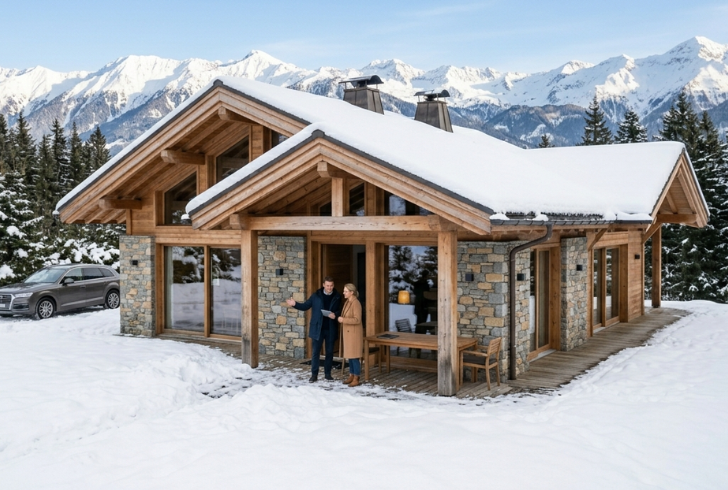
Gemini AI | Limited visibility in off-market transactions can lead to higher prices by stifling natural competition.
Despite exclusivity, off-market deals carry real trade-offs. Limited visibility can reduce competitive pressure, which sometimes leads to inflated pricing.
Many brokers suggest that a 3% to 5% premium may be reasonable for securing a rare property without bidding wars. Anything beyond that often requires deeper scrutiny of comparable sales and long-term value.
Correia acknowledges the emotional pull behind unique properties. “If someone has been waiting five years for a specific ski-in, ski-out property and it’s finally available, paying a premium may be worth it,” he said. Still, careful analysis remains essential before committing to private deals.
Market Direction Across Colorado Ski Regions
Market behavior in Eagle County, which includes Vail, Beaver Creek, Ski Cooper, and Copper Mountain, continues to shift with inventory changes. Brokers report gradual increases in available listings, which may influence how often sellers choose off-market strategies.
Correia notes that private listings tend to rise when supply is tight and decline as inventory expands. As more homes enter the market, public exposure becomes more attractive for sellers aiming for broader reach.
Dunn also expects continued experimentation with non-MLS distribution channels as sellers explore flexible listing models that balance privacy with visibility.
The off-market ski mansion segment in Colorado sits between exclusivity and uncertainty. For sellers, it offers privacy and control over timing and perception. For buyers, it opens doors to properties rarely seen in public listings, often with reduced competition but less pricing transparency.
Success in this space depends heavily on local expertise, data-driven valuation, and readiness to act when rare opportunities appear. While some private deals align well with market value, others drift significantly above it, making careful evaluation a central part of every transaction in Colorado’s high-end ski real estate world.
More in Rich & Famous
-
`
 Why There Were No “Good Looks” at This Year’s Bezos Bash Met Gala
The Met Gala has always lived at the intersection of fashion, fame, and financial excess. This year, that intersection turned sharper....
May 24, 2026 -
`
 Why the Ultra-Wealthy Are Investing Outside the US
The United States still holds its position as the world’s largest center for billionaire and millionaire wealth. Yet a noticeable shift...
May 17, 2026 -
`
 SpaceX Is Going Public — Here’s What $5,000 Could Become in 5 Years
Anticipation is building around one of the most closely watched public offerings in recent memory. SpaceX, led by Elon Musk, has...
May 10, 2026 -
`
 Reed Hastings, Netflix Co-Founder, Is Leaving the Company
Netflix confirmed in its first-quarter earnings report that Hastings will not seek reelection to the board and will officially part ways...
May 1, 2026 -
`
 What’s the Average Investment Portfolio for People in Their 30s Today?
Reaching the 30s often brings a mix of financial priorities that compete for attention. Home ownership, student loan repayment, growing families,...
April 19, 2026 -
`
 Is Tesla’s Investment in xAI a Smart Move for Investors?
Tesla’s decision to invest nearly $2 billion in xAI has quickly sparked debate across Wall Street. At first, the move may...
April 12, 2026 -
`
 If You Owe Student Loans, Don’t Miss This Treasury Update
A major shift is on the horizon for millions of student loan borrowers across the United States. The federal government has...
April 5, 2026 -
`
 Is $1 Million the New Middle Class? Why Millionaires Don’t Feel Rich Anymore
Reaching a million dollars once symbolized success. Today, it feels more like a milestone than a finish line. Many who achieve...
December 21, 2025 -
`
 Switzerland Ends Hands-Off Stance With Landmark Foreign Investment Screening Law
For years, Switzerland stood out as one of the few major economies without a broad system to screen foreign takeovers. Deals...
December 21, 2025
More From InvestmentGuru
-
 Nick Clegg’s Nscale Stake Could Be Worth $40 Million After IPO
Nick Clegg could see the value of his stake in UK-based data center company Nscale rise sharply if the company completes...
Rich & FamousOctober 10, 2026 -
 Where Does the Money Go When the Stock Market Crashes?
A sharp stock market drop can erase trillions of dollars in market value within hours. That can make it seem as...
AdvisorOctober 3, 2026 -
 How to Protect Your Portfolio During Market Volatility
Market swings can test even the most carefully planned investment strategy. A sudden drop can trigger fear, while a sharp rise...
InvestmentsSeptember 26, 2026 -
 Why Nvidia Is Spending Nearly $13 Billion on Hugging Face
Nvidia is making a major move in the artificial intelligence software market. The chipmaker plans to acquire AI platform Hugging Face...
BusinessSeptember 19, 2026 -
 Warren Buffett’s 2 Success Lessons Ndamukong Suh Still Follows
Ndamukong Suh learned about success from one of the most respected investors in the world. More than 15 years ago, while...
Rich & FamousSeptember 12, 2026
You must be logged in to post a comment Login